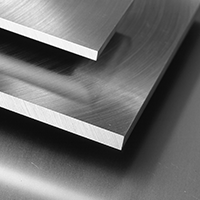
PREMIUM 1.7147 Steel
20MnCr5, (EC100)

AISI / SAE 5120

PREMIUM 1.7147 Steel
20MnCr5, (EC100)

20MnCr5, (EC100)
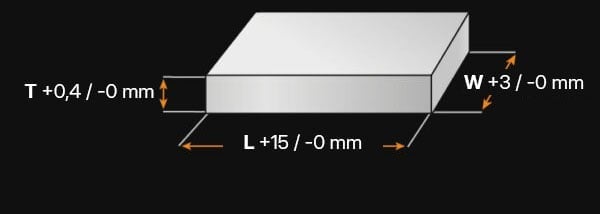
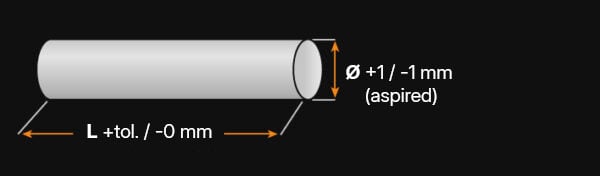
PFS/BA
-flat-
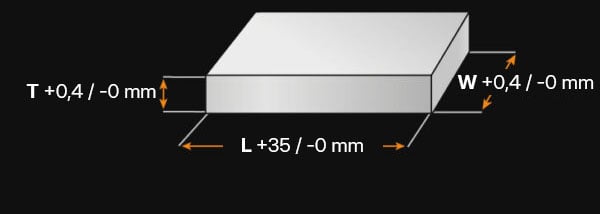
Toleranzen.png
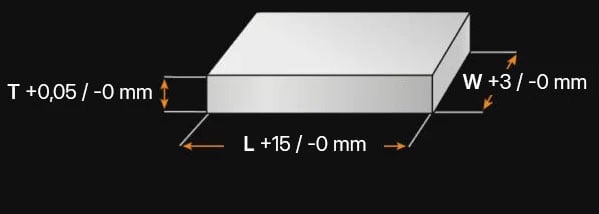
€co-Präz® [€co/BA]
-flat-
Toleranzen-1.png
€co-Präz® [€co]
-flat-
Toleranzen-1.png

1.7147  - AT A GLANCE

What kind of steel is the 1.7147?

Steel grade 1.7147 also known under its chemical discription 20MnCr5 or the EC100. As a case-hardening steel it can be used for applications needing a high surface hardness and a tough core. This combination gives this steel grade a high tensile strength which may be necessary in the automotive industry but also for mechanical engieering.

Properties

Due to its great properties, heat treatable steel 1.7147 can be found in many industries as well as applications. An appropriate heat and surface treatment are used to give this steel grade its toughness and wear resistance to make it the powerful steel it is.

  • Cold work steel
  • Plastic mold steel
  • Case-hardening steel
  • Wear-resistant surface
  • Tough core
  • Very good machinability
  • Good cold sinkability
  • Good polishability
  • Nitridable
  • Weldable

Applications

As a cold work and plastic mould steel the 1.7147 can be used for a wide variety of applications. Here you are able to find some examples:

  • Mechanical engineering
  • Jig construction
  • Plant construction
  • Apparatus engineering
  • Plastic processing
  • Plastic moulds
  • Synthetic resin moulds
  • Base plates
  • Bending bars
  • Guide columns
  • Gear parts
  • Joint parts
  • Shafts
  • Gears
  • Rods
  • Bevel gears Crown Wheels
  • Piston pins
  • Camshafts
  • Bolts
  • Pins
  • Cardan joints

1.7147 Standard values

Chemical composition:

C Si Mn P S Cr
0.17 - 0.,22 0.0 - 0.4 1.1 - 1.4 0.0 - 0.025 0.0 - 0.035 1.0 - 1.3

Chemical designation:
20MnCr5, (EC100)

Working hardness (surface):
58-60 HRC

Delivery condition:
max. 217 HB

1.7147 Physical Properties

  • Case hardening steel
  • Plastic mould steel
  • Cold work steel
  • High grade structural steel

No, the 1.7147 is not a classical stainless steel.

For a steel to be corrosion resistant it has to have a mass fraction of at least 10,5 % of chromium. The 1.7147 has a mass fraction of 1 – 1,3 % and is not corrosion resistant.

As a low-alloy steel, the 1.7147 mainly contains iron, which gives it ferromagnetic properties. This means that the 1.7147 is magnetisable.

As a cold work steel, 1.7147 has good cold workability. It can be used for applications that are exposed to high loads at low temperatures.

On a scale where 1 is low and 6 is high the 1.7147 receives a 5 for its wear resistance.

1.7147 Technical properties

Material 1.7147 is not suitable for knife production. To produce high-quality knives, a steel grade must have high hardness and cutting strength as well as high corrosion resistance. The combination of these properties results in a high-quality knife that is break-proof, easy to sharpen and corrosion-resistant.

1.7147 does not have the necessary corrosion resistance and has limited ability to maintain a sharp cutting edge, which makes it not suitable for use as knife steel.

The working hardness for the 1.7147 is in the range of 58 – 60 HRC.

At room temperature the density for the 1.7147 is at 7,75 g/cm3.

The 1.7147 has a tensile strength of approx. 720 N/mm2. A tensile test is carried out to obtain this information, which shows how much load is required to stretch or elongate a sample before it breaks.

On a scale where 1 is low and 6 is high the 1.7147 receives a 5 for its machinability.

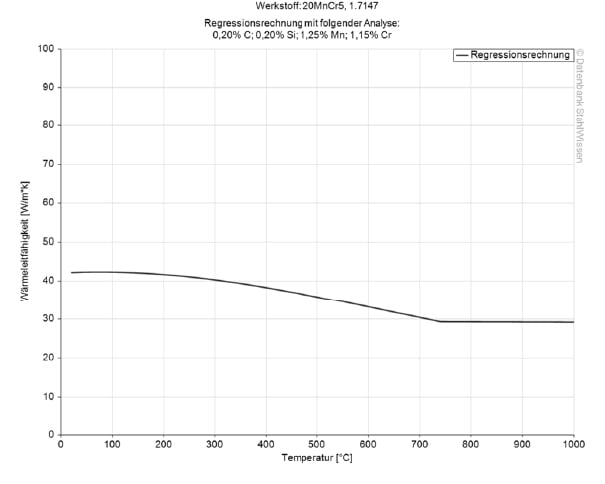
At room temperature the 1.7147 is at 42,0 W/(m*K).

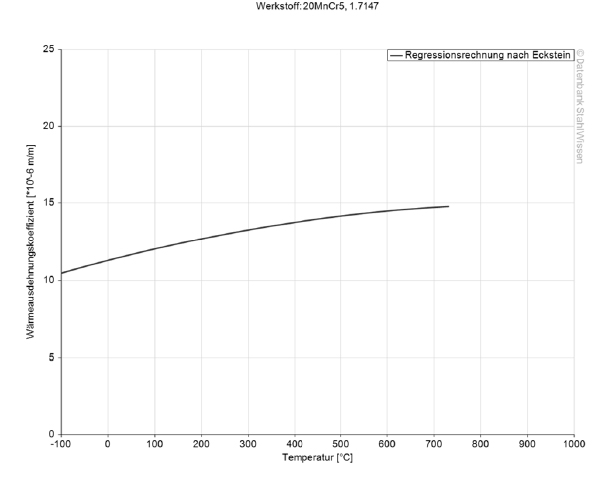
The thermal expansion coefficient indicates how much the material can expand or contract when temperatures change. This is very important information, especially when working with high temperatures or when there are significant temperature fluctuations during use.

Medium thermal expansion coefficient

Value tempered
10-6m/(m*K)

At a temperature of

11.5

20 – 100 °C

12.5

20 – 200 °C

13.3

20 – 300 °C

13.9

20 – 400 °C

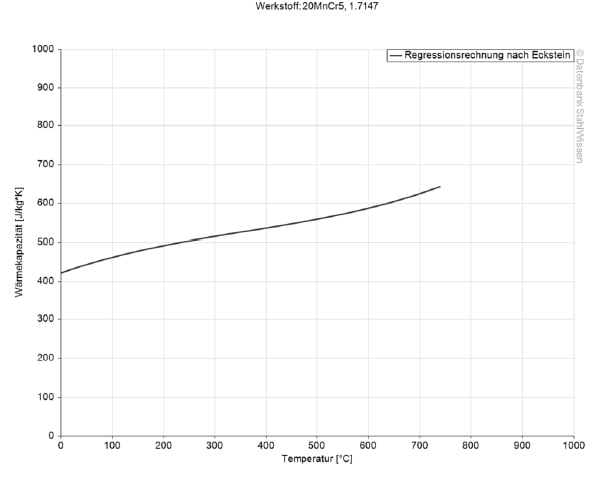
The specific heat capacity indicates how much heat is required to heat a certain amount of material by 1 Kelvin.

Medium thermal expansion coefficient

Value tempered
10-6m/(m*K)

At a temperature of

11.5

20 – 100 °C

12.5

20 – 200 °C

13.3

20 – 300 °C

13.9

20 – 400 °C

Den spezifischen elektrischen Widerstand können Sie der folgenden Tabelle entnehmen. Die elektrische Leitfähigkeit ist der Gegenwert des spezifischen elektrischen Widerstands.

Spezifischer elektrischer Widerstand

Wert (Ohm*mm²)/m

Bei einer Temperatur von

0.12

20  °C

CASE HARDENING STEEL!

1.7147 Procedure

Heat treatment determines material properties. It should therefore always be carried out with care. Properties such as strength, toughness, surface hardness and temperature resistance are determined, which in turn can extend/improve the service life of parts, tools and components.

Heat treatment includes solution annealing, soft annealing, normalising, stress relief annealing, but also tempering, hardening and quenching or tempering.

To anneal the 1.7147 heat the material to a temperature of 650 – 700 °C and then slowly cool it in the furnace.

To temper the 1.7147 it is heated to a temperature of 150 – 200 °C and held there. To finish the process the material is cooled down in air.

To core hardening the 1.7147 evenly to a temperature of 780 – 820 °C and then quench it.

To case hardening, the 1.7147 is heated evenly to a temperature of 780–820 °C and then quenched.

Quenching after core and case hardening is carried out in the following media:

  • Oil
  • Hot basin (160 – 250 °C)

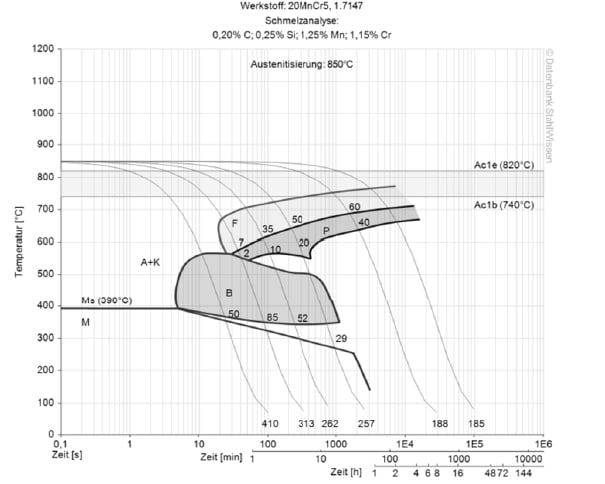
This diagram shows micro-changes over time at different temperatures. These are important in heat treatment because they provide information about the optimal conditions for processes such as hardening, annealing and normalising.

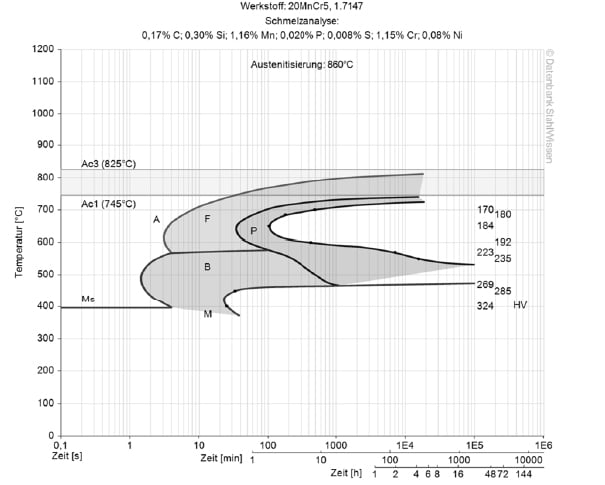
This diagram shows the structural changes at micro level over time at a constant temperatur. It shows at which temperatures after what time the different phases like perlit, martensite or bainite start to form.

1.7147 Surface treatment

This process diffuses nitrogen into the surface of the material to make the surface hardness higher. This gives the material a better wear resistance and corrosion resistance.

These two processes apply a thin, hard layer to the surface of the material to give it a harder surface with better wear resistance, improved corrosion resistance and lower friction.

  • PVD – physical vapour deposition
  • CVD – chemical vapour deposition

1.7147 Processing

In general, a material is eroded in order to produce workpieces from a single piece. Erosion can be used to produce dies or more complex shapes. There are various methods of eroding different materials, such as wire erosion, spark erosion or die-sink erosion.

o forge the 1.7147 should be heated to a temperature of 850 – 1100 °C in which range the material can be forged.

With suitable preheating, the appropriate welding process and welding consumables, as well as post-heating, 1.7147 can be welded.

ALTERNATIVES

Are you looking for an alternative steel grade?

With the ABRAMS STEEL GUIDE®, you are able to obtain an alternative or equvelent with just a few clicks.

DATASHEET

Download the technical data sheet in PDF format here.

Messe.png

SERVICES

Do you require special dimensions?


Our services for you: water jet cutting, sawing, milling and grinding.

richtwerte-2.png

Standard values

Chemical designation: 20MnCr5, (EC100)
Working hardness (surface): 58-60 HRC
Delivery condition: maximum 217 HB
Chemical composition:
C Si Mn P S Cr
0,17

0,22
0

0,4
1,1

1,4
0

0,025
0

0,035
1,0

1,3
Logo_Abrams_Ausrufezeichen.png
CASE HARDENING STEEL!
technical-info.png

Technical properties

Cold work and plastic mould steel (group of case hardening steel) with the objective of high surface hardness with core toughness. Excellent machinability, good cold hobbing and polishing propeties. The tensile strength is a result of the combination of hardened surface and tough core.

anwendungen.png

Applications

Mechanical engineering, jig construction, plant engineering, apparatus engineering, plastic processing, plastic moulds, synthetic resin moulds, base plates, bending bars, guide columns, gear parts, joint parts, shafts, gears, rods, bevel gears, crown wheels, piston pins, camshafts, bolts, pins, cardan joints.

70 STEEL GRADES IN 33.895 DIMENSIONS

EX WORKS FROM OSNABRÜCK

DELIVERY IN 3-5 WORKING DAYS (SUBJECT TO AVAILABILITY)

WITHOUT MINIMUM ORDER VALUE OR QUANTITY

FROM EUROPE'S LARGEST RANGE OF SEMI-FINISHED PRODUCTS

SPECIAL CUSTOM DIMENSIONS SAWN - MILLED - GROUND

Select Your Country / Language

Do you have any questions?

If you have any comments or questions regarding ABRAMS PREMIUM STEEL® products or this website, please do not hesitate to contact us.

Please feel free to call us at any time:

+49 541/357 39-0

or send us an E-mail to:

[email protected]

If you have any comments or questions regarding ABRAMS PREMIUM STEEL® products or this website, please do not hesitate to contact us.

Please feel free to call us at any time: