1.2862 - AT A GLANCE
What kind of steel is the 1.2862?
The 1.2826 is a tool steel with excellent spring properties when tempered and can therefore be used for elements needing to be more flexible in the production of tools and machines. This cold work steel has a high toughness and can be used diversely.
Properties
This tool steel finds it use in many industries due to his great properties. Hardness, wear resistance and toughness are needed in the production of tools, structural parts and components. With a suitable surface treatment propeties like the corrosion resistance but also the productivity and tool life can be positively influenced.

- Wear resistant
- Spring properties
Applications
Due to its high wear resistance, good wear resistance, toughness and hardness the 1.2826 finds it uses in the tool and die production, automotive industrie, aero and space industrie as well as in the energy producing industry. Though its hardness can be a disadvantage as well as machining can be challenging and special tools are needed to machine this steel grade. Corrosion resistance could be problematic in moist or agressive environments. With a suitable surface treatment the corrosion resistance can be enhanced.

- Collets
- Collet chucks
- Swages
- Dies (small quantities)
- Hot cutting tools
- Hammer saddles
- Press saddles
- Trimming tools
- Ejectors
- Press plates
- Cold bending tools
- Shear blades
- Punching dies
- Screwdrivers
- Punches
- Expanding mandrels
- Centre punches
- Nail punches
1.2826 Standard values
Chemical composition:
| C | Si | Mn | P | S | Cr |
|---|---|---|---|---|---|
| 0.58 - 0.65 | 0.8 - 1.0 | 0.8 - 1.2 | 0.0 - 0.03 | 0.0 - 0.03 | 0.2 - 0.4 |
Chemical designation:
60MnSiCr4
Working hardness:
57-60 HRC
Delivery condition:
max. 220 HB
1.2826 PHYSICAL PROPERTIES
What group of steel does the 1.23826 belong to?
- Tool steel
- Cold work steel
Is the 1.2826 a stainless steel?
With a mass fraction of 0,2 – 0,4% chromium the 1.2826 is not a classical stainless steel.
Is the 1.2862 corrosion resistant?
No, tool steel 1.2826 is not corrosion resistant. To get a steel grade that is corrosion resistant it has to have a mass fraction of minimum 10,5% of chromium. As the 1.2826 has a mass fraction of 0,2 – 0,4% it contains not enough chromium to be a corrosion resistant steel.
Is the 1.2826 magnetisable?
The main component in the 1.2826 is iron (Fe) which makes this steel grade a ferro magnetic material and magnetisable. The magnetic properties make it possible to use magnetic clamping plates to machine this material.
1.2826 Wear resistance
On a scale where 1 is low and 6 is high the 1.2826 gets a 3 for its wear resistance.
1.2826 TECHNICAL PROPERTIES
1.2826 Working hardness
Tool steel 1.2826 can reach a working hardness of max. 60 HRC.
1.2826 Density
The typical density for tool steel 1.2826 at room temperature is 7,86 g/cm3.
1.2826 Machinability
On a scale where 1 is low and 6 is high tool steel 1.2826 gets a 3 for its machinability.
1.2826 Tensile strength
The tensile strength for the 1.2826 at delivery is at 750 N/mm2. For this result the material is undergoing a tensile test which shows how much force is needed before the material starts to stretch or elongate before it breaks.

1.2826 Heat conductivity
The heat conductivity for the 1.2826 is at 34,2 W/(m*K) at room temperature.

Heat conductivity
Value W/(m*K)
At a temeprature of
34.2
20 °C
32.6
350 °C
31.0
700 °C
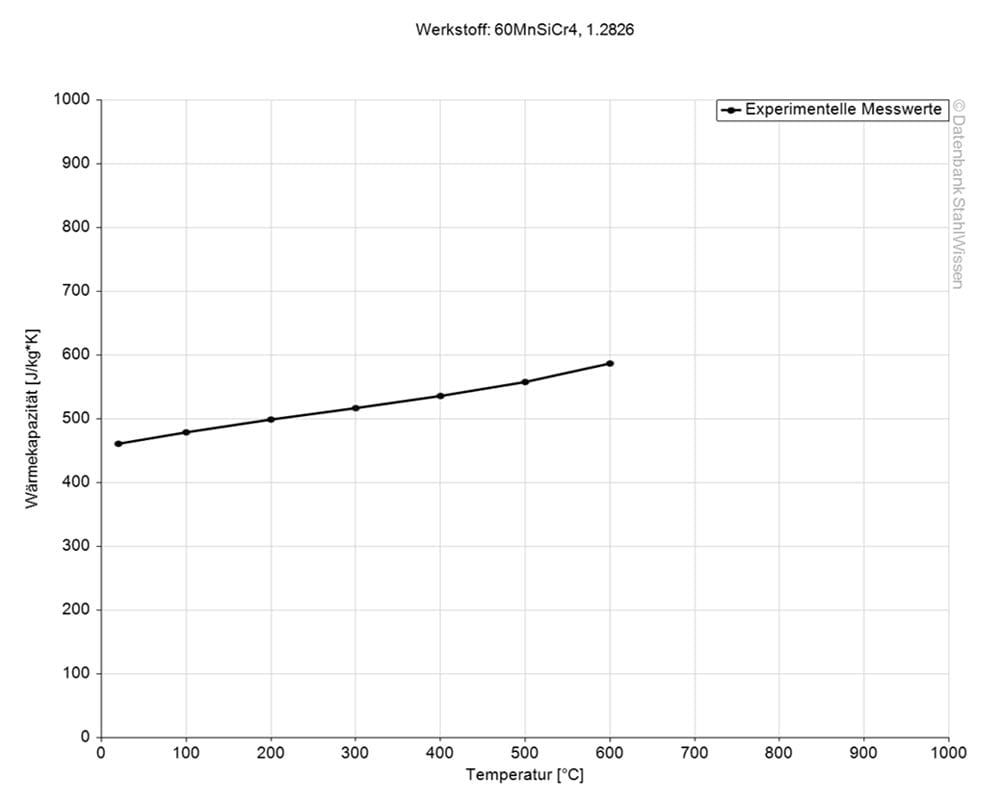
1.2826 Specific heat capacity
This value shows how much heat is needed to heat a specific amount of material by 1 Kelvin.
1.2826 Thermal expansion coefficient
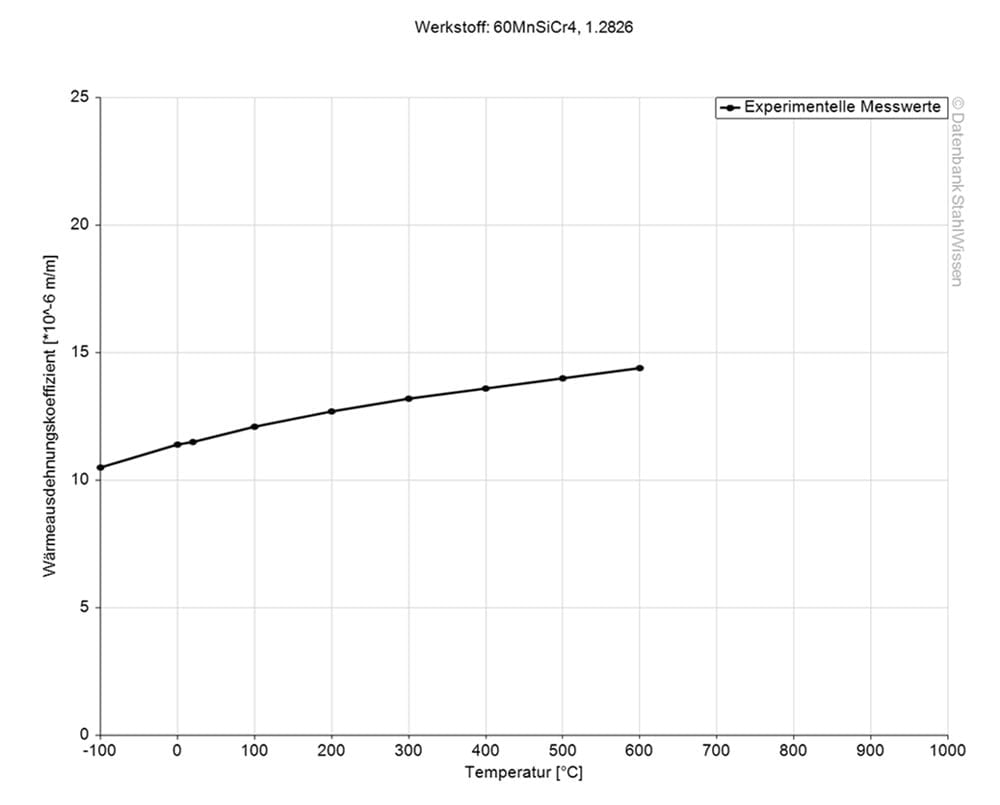
The thermal expansion coefficient shows how much a material expands or contracts at any temperature changes. This information can be relevant when when components or parts are exposed to high temperatures or for applications with ever changing temperatures.
Medium thermal expansion coefficient
At a temeprature of
12.1
20 – 100 °C
12.8
20 – 200 °C
13.3
20 – 300 °C
13.5
20 – 400 °C
1.2826 Elastizitätsmodul (e-Modul)
Das Spannungs- und Dehnungsmodul, oder Elastizitätsmodul (Youngscher Modul), für Werkzeugstahl 1.2826 liegt bei 210 kN/mm2.
Is tool steel 1.2826 a knife steel?
The combination of good hardness, wear resistance and toughness makes the 1.2826 a good knife steel. Due to its high hardness special tools might be needed to sharpen this material grade. Blades from this tool steel should be kept and stored in a dry environment and may be oiled to protect it from corrosion.
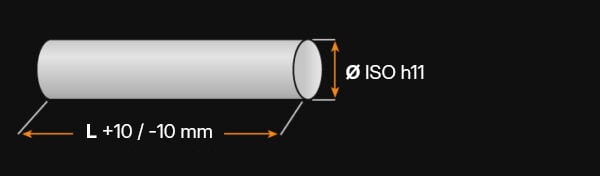
PRECISION ROUND STEEL
WITHOUT MACHINING
ALLOWANCE –
ISO h8, h9, h11
1.2826 PROCEDURE
1.2826 Heat treatment
The heat treatment determines the material properties and should be carried out with care. Properties such as strength, toughness, surface hardness and temperature resistance are determined, which in turn can extend/improve the service life of parts, tools and components.
Heat treatment includes solution heat treatment, soft annealing, normalising, stress-relief heat treatment, but also tempering, hardening and quenching.
1.2826 Annealing
To anneal the 1.2826 the material should be heated to a temeprature if 680 – 710°C in the oven and soaked for 2 – 4 hours. This is followed by cooling the material in the oven to reach a maximum annealing hardness of 220 HB.
1.2826 Stress relieving
To reduce the internal stresses work pieces are stress relieved. They are being heated evenly, in the oven, to a temperature of approx. 650°C. Afterwards they should are cooled down in the oven between 2 – 4 hours.
The process of stress relieving makes sure that the work pieces have a better dimensional accuracy or stability which is important for some applications. Stress reliving is most often done after machining or forming.
1.2826 Tempering
Tempering the 1.2826 kann eliviate internal stresses and also give the material the balance between its hardness and toughness.
You are able to find more information in the diagram below:
1.2826 Hardening
Tool steel 1.2826 is heated evenly through to a temperature of 820 – 860°C for this process.
1.2826 Quenching
The tool steel 1.2826 can be quenched in:
- Oil
- Hot basin (180 – 220°C)
Through this process the material can reach a hardness of approx. 61 HRC.
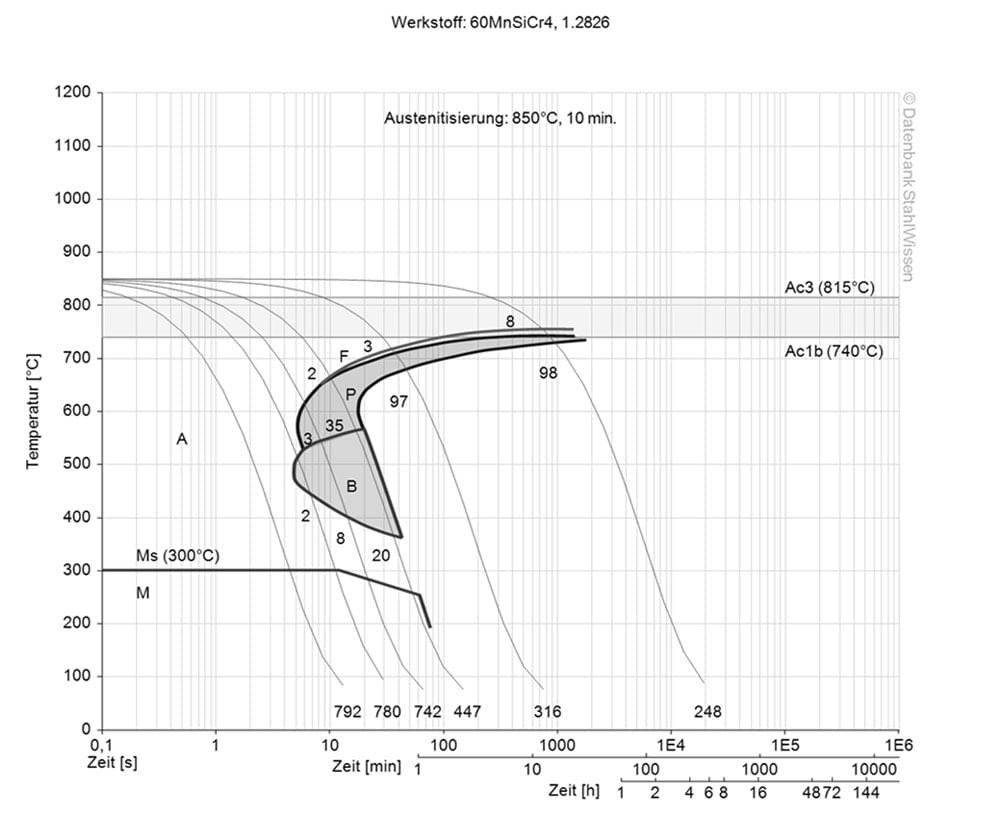
1.2826 Continuous TTT-Diagram
The TTT-diagram usually shows micro-changes over time at different temperature . These are important in heat treatment as they provide information on the optimal conditions for processes such as hardening, annealing and normalising.
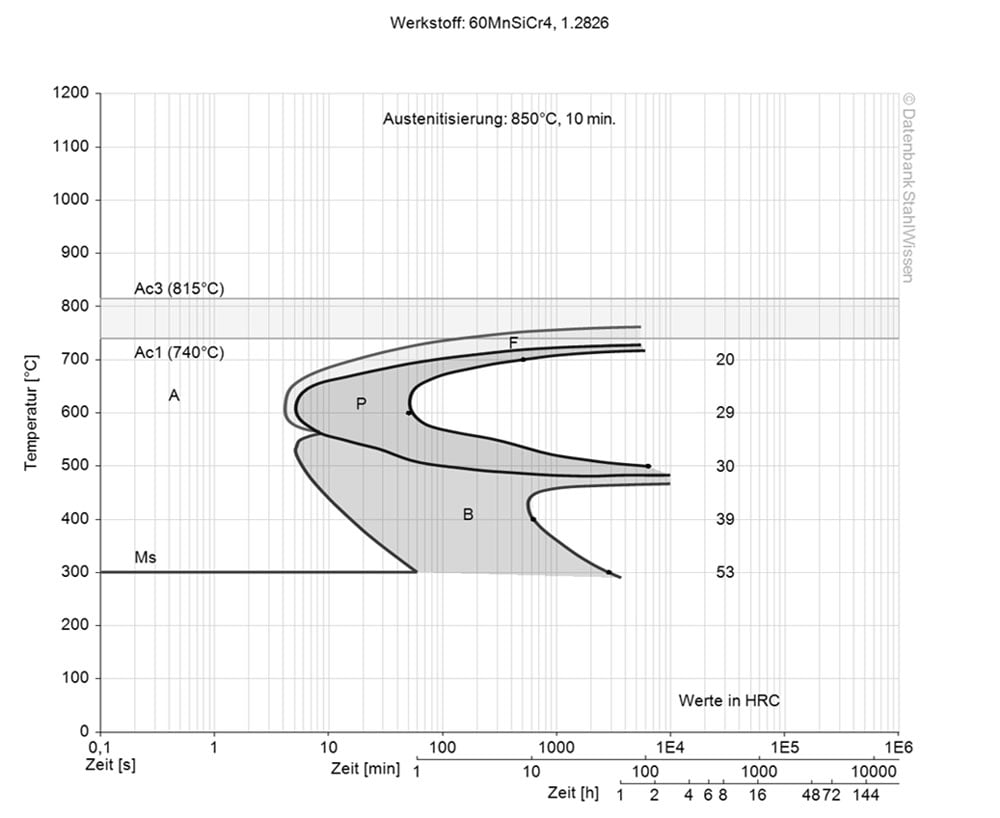
1.2826 Isothermal TTT-diagram
This diagram shows the structural changes at micro level over time at a constant temperatur. It shows at which temperatures after what time the different phases like perlit, martensite or bainite start to form.
1.2826 SURFACE TREATMENT
Next to hardening and tempering which give the material a higher hardness and wear resistance. There are other treatments like a surface treatment for example that the 1.2826 can benefit from:
1.2826 Nitriding
By introducing nitrogen into the material surface, a hard and wear-resistant layer is created that increases wear resistance and service life. To meet the requirements of the respective application, the thickness of the nitrided layer should be carefully considered
1.2826 PVD- and CVD coating
During this process, a thin coating of, for example, TiN or TiAlN is applied to the material to improve wear resistance or corrosion resistance or to reduce friction.
- PVD – physical vapour deposition
- CVD – chemical vapour deposition
1.2826 Shot peening
This process involves firing multiple high-velocity shots at the surface of the material, creating small indentations to eliminate stress peaks. This makes the surface more resistant and can prevent fatigue and stress corrosion damage.
1.2826 PROCESSING
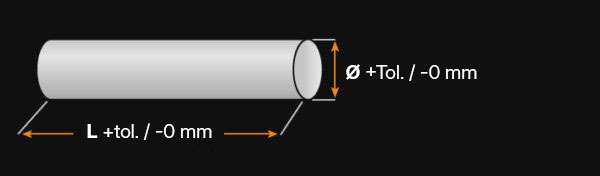
1.2826 Machining allowance / dimensional changes
Like any other metal the 1.2826 expands when heated and contracts during cooling. A controlled heating period throughout the hardening and tempering process as well as the cooling process can minimise deformation and dimensional changes. In addition, the reduction of stresses and/or dimensional changes should be considered by adding tolerances to the dimensions.